Intro
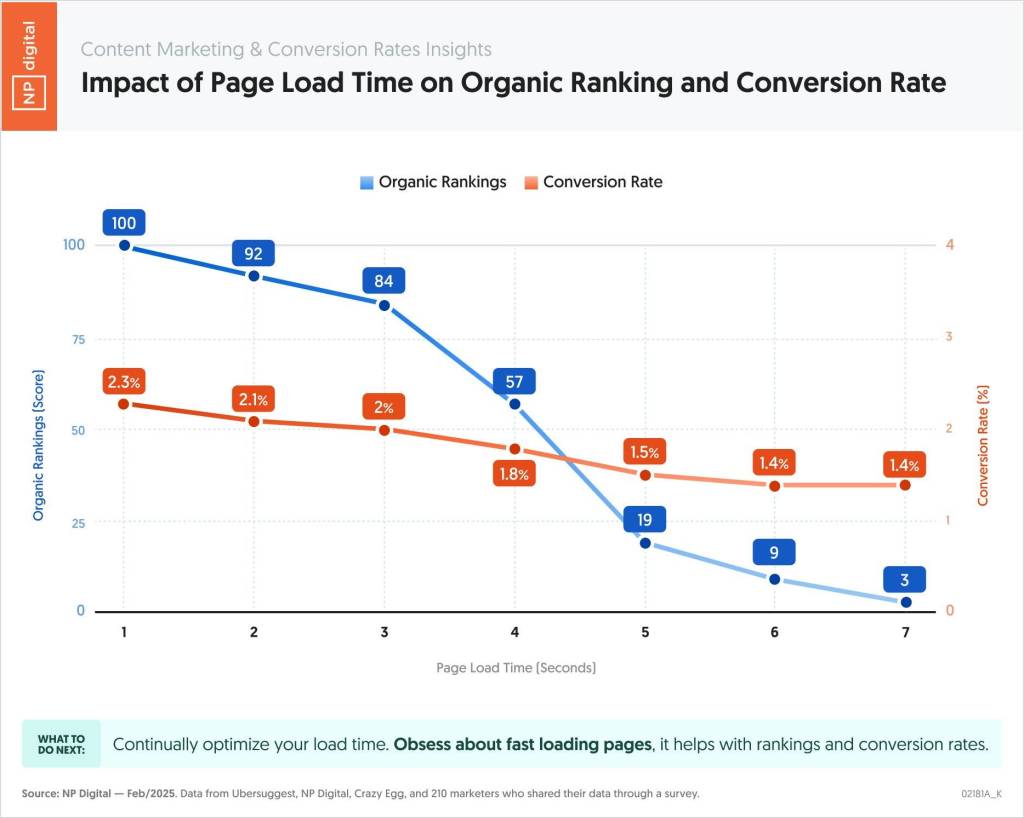
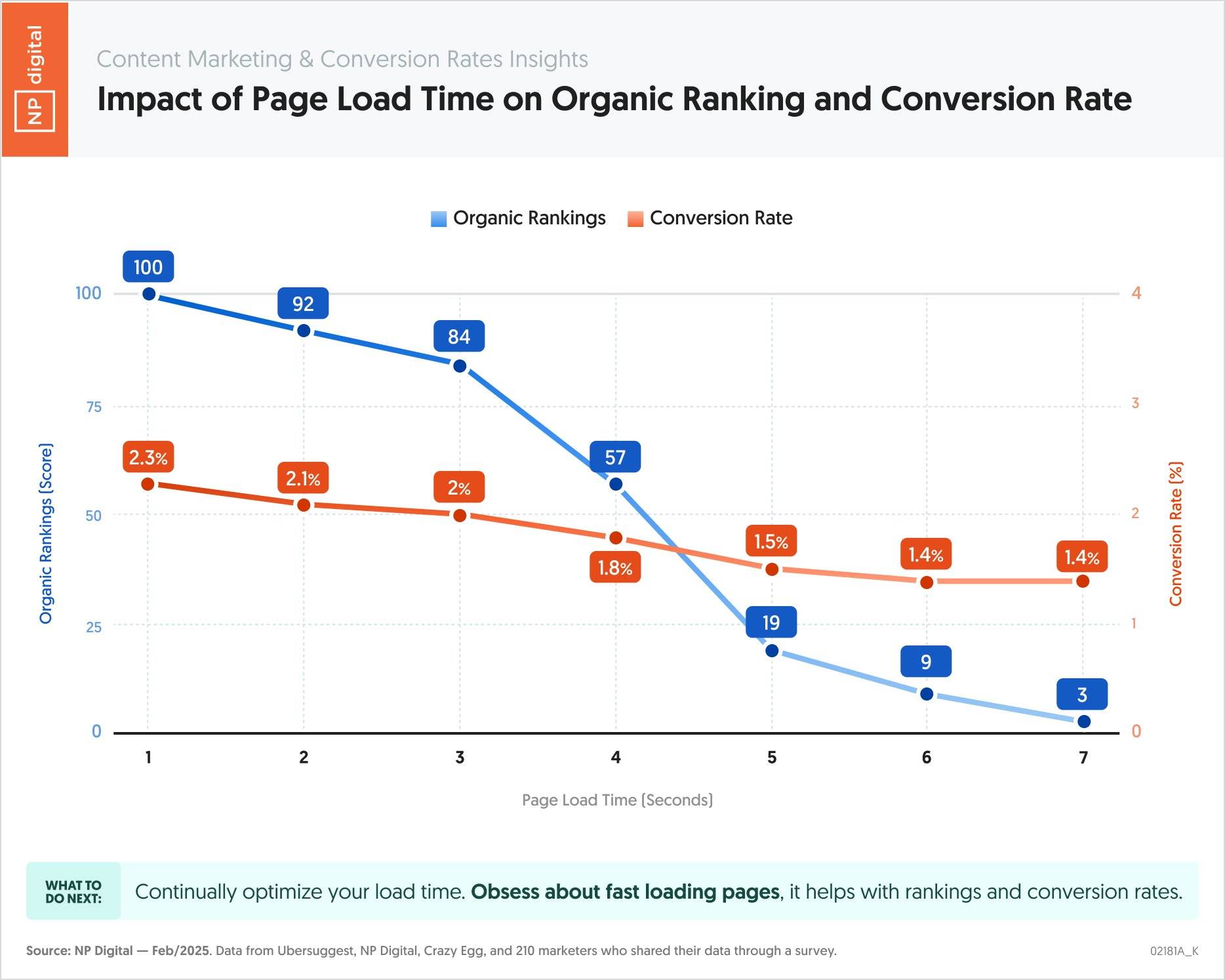
In a digital-first world, milliseconds can make or break your online success. According to recent insights from NP Digital, there’s a direct and undeniable link between your website’s load time and its organic search rankings and conversion rate. As page load time increases from 1 to 7 seconds, organic rankings drop dramatically from a perfect 100 to just 3, while conversion rates fall from 2.3% to a low of 1.4%. The implications are clear—slow websites not only frustrate users but also bleed revenue and visibility.
The Search Engine Penalty for Slowness
Search engines like Google increasingly factor user experience metrics into their ranking algorithms, and speed is a huge part of that equation. As the chart shows, going from a 1-second to a 4-second load time cuts your ranking score nearly in half—from 100 to 57. By 5 seconds, your score drops to 19, and at 7 seconds, you’re essentially invisible with a score of just 3. These numbers highlight how search engines treat slow websites: with penalties that push them further down the results page.
Conversion Rates Quietly Deteriorate
While organic rankings plummet sharply, conversion rates show a more gradual but equally concerning decline. Starting at 2.3% for a 1-second load time, conversions drop steadily to 1.4% at 7 seconds. That seemingly small 0.9% difference can translate into thousands of lost conversions over time—especially for high-traffic or e-commerce websites. It’s not just about attracting visitors; it’s about keeping them long enough to convert.
Why Faster Pages Mean Better Business
Optimizing for speed is no longer optional—it’s foundational. A fast-loading site signals to users and search engines that you prioritize experience. It reduces bounce rates, increases time on site, and boosts trust. These all lead to higher engagement and stronger business performance. Whether you’re a B2B SaaS provider or a direct-to-consumer brand, faster pages are simply better for business.
How to Optimize Your Load Time
Improving page speed doesn’t require a complete website overhaul. Start by compressing images, enabling browser caching, reducing redirects, and implementing lazy loading. Use tools like Google PageSpeed Insights or GTmetrix to diagnose specific issues. If you’re on a platform like Shopify or WordPress, consider lightweight themes and plugins. Also, work with your development team to prioritize clean, lean code and a reliable hosting service.
What to Expect When You Optimize
Businesses that obsess over fast load times see measurable benefits: improved search engine visibility, better customer experiences, and ultimately, more revenue. Your site not only ranks higher but performs better across every metric that matters. In an era where attention spans are shorter than ever, speed is the secret weapon that separates leaders from laggards. Make it a priority—and watch your performance soar.
 THINK WITH ALEC
Leave a comment