Digital commerce has spent the last two decades optimizing the storefront.
We’ve improved site speed. Refined navigation. Added smarter search. Built better product pages. Streamlined checkout. Layered in personalization, reviews, and merchandising.
And yet, for all the progress, one thing has remained largely unchanged:
Most online stores still expect customers to figure everything out on their own.
That model is starting to feel dated.
Because today’s customer doesn’t just want access to products. They want simplicity and ease of use. They want relevance. They want faster answers, clearer recommendations, and more confidence in what they’re buying without much thinking.
That is where Agentic Commerce enters the picture.
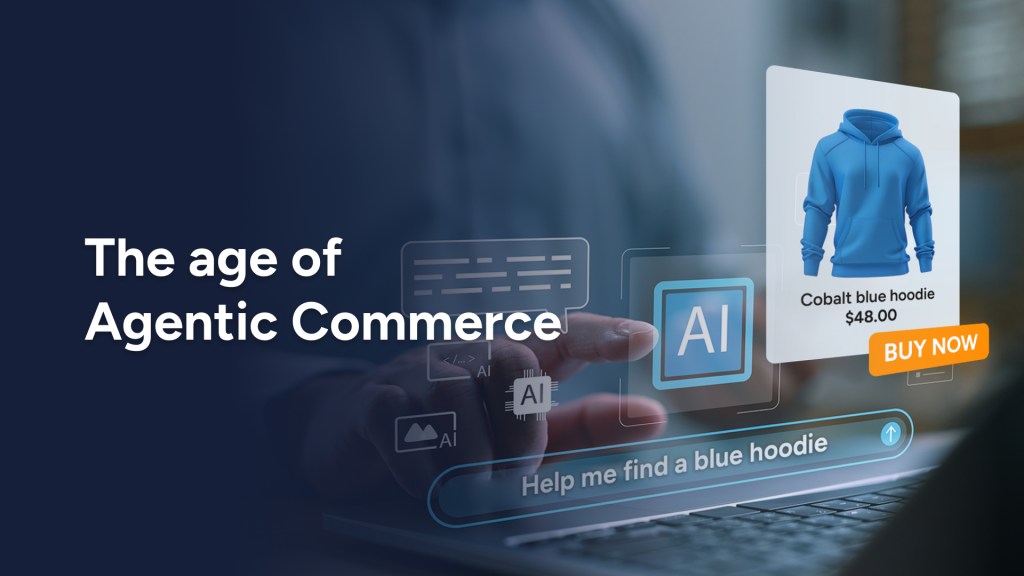
This is not about adding another chatbot to a website. It is about introducing AI shopping agents as a personal shopper assistant into the buying journey, giving customers a more guided, conversational, and intelligent way to shop.
And if this trend continues to scale, it will raise a much bigger question for brands:
Is your store ready to be sold by AI?
What Is Agentic Commerce?

At its core, Agentic Commerce is the evolution of eCommerce from a static storefront into an intelligent, AI-assisted buying experience.
Instead of forcing shoppers to rely entirely on:
- category navigation
- product filters
- keyword search
- static product pages
- FAQs
- manual comparison
Agentic commerce introduces AI shopping agents that can actively support the purchase journey.
These agents can help customers:
- discover relevant products
- narrow down options
- compare choices
- answer pre-purchase questions
- recommend the right fit
- reduce hesitation
- guide them toward conversion
In simple terms:
Traditional eCommerce says: “Browse our store.”
Agentic Commerce says: “Tell me what you need.”
That is a meaningful shift.
Because the moment commerce becomes more intent-led and less browse-led, the shopping experience changes completely.
How Agentic Commerce Works
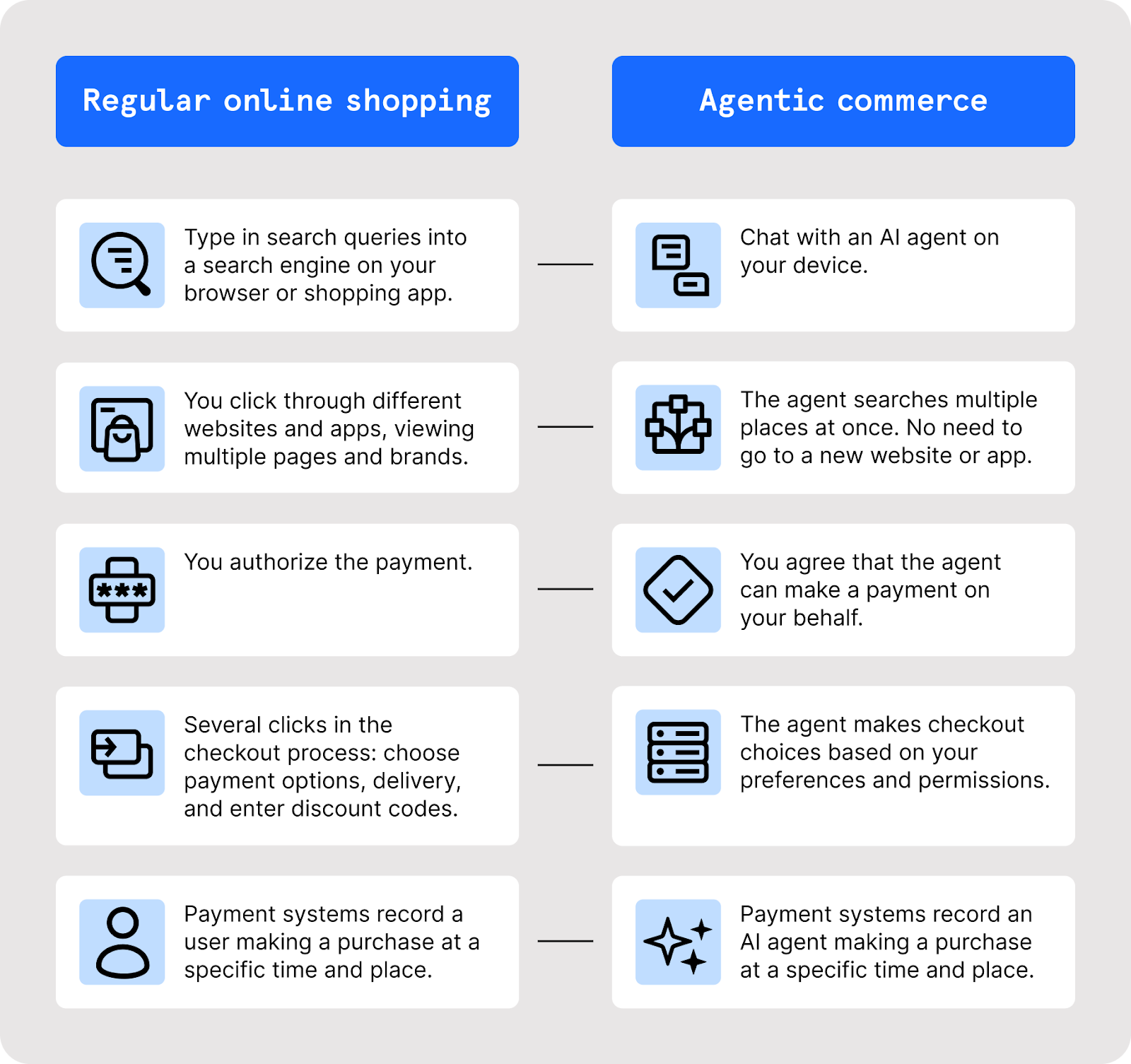
For all the buzz around AI, Agentic Commerce becomes much easier to understand when you break it down into how it actually works inside a storefront.
A true AI shopping agent is not just there to answer generic questions. It is there to support the decision-making process.
That usually happens through a few important layers.
1. Product Catalog Intelligence
The first requirement is data.
An AI shopping agent needs access to the product catalog and enough context to understand what each item is, who it is for, and how it should be recommended.
That includes things like:
- product titles
- descriptions
- categories
- variants
- pricing
- availability
- attributes
- benefits
- compatibility
- use cases
If the product data is weak, incomplete, or inconsistent, the AI experience will also be weak.
This is one of the most important realities brands need to understand early.
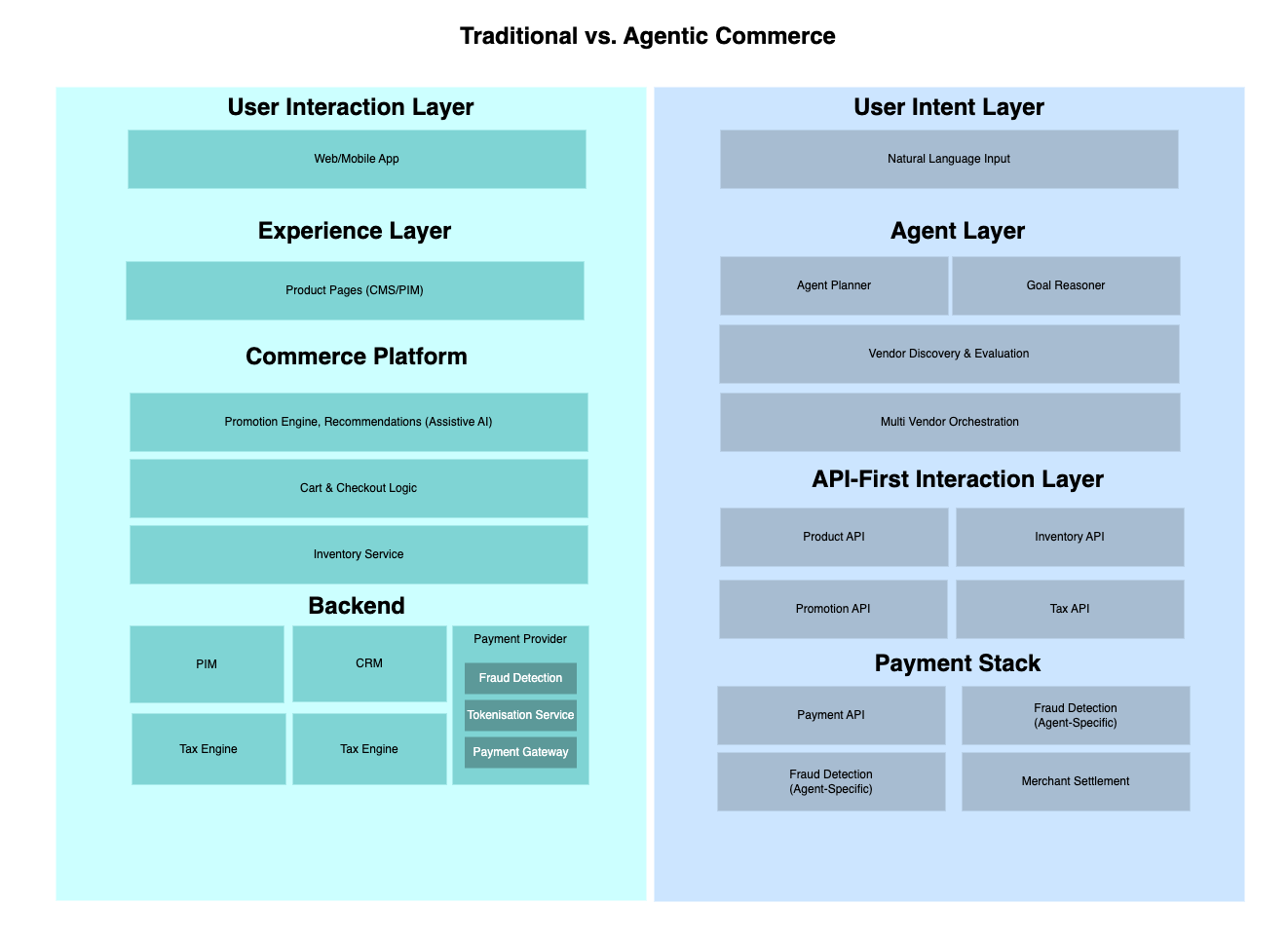
Agentic Commerce is only as smart as the product data behind it.
2. Natural Language Shopping
Traditional eCommerce relies heavily on the customer knowing how to search and where to click.
Agentic Commerce changes that by allowing shoppers to interact in natural language.
Instead of searching for a product using filters or exact terms, a customer can say things like:
- “What’s the best beginner option?”
- “I need something under $100.”
- “Which one is better for travel?”
- “What would you recommend for sensitive skin?”
- “I’m looking for a gift for someone who loves fitness.”
This is where the experience starts to feel less like browsing a catalog and more like talking to a helpful associate.
And that matters, because customers increasingly expect technology to adapt to how they think, not the other way around.
3. Recommendation and Decision Support
This is where the AI starts moving beyond simple search and into actual commerce value.
A stronger AI shopping agent should be able to:
- interpret customer intent
- narrow product choices
- explain the difference between options
- recommend bundles or alternatives
- reduce uncertainty
- support decision-making
This is the key distinction between a chatbot and a shopping agent.
A chatbot is usually reactive.
A shopping agent should be commercially useful.
That means helping the customer move closer to a buying decision, not just answering a support question.
4. Store Concierge and Operational Support
As these tools evolve, the shopping agent often begins to overlap with the role of a digital concierge.
That means the AI may also support things like:
- shipping questions
- return policies
- order support
- store navigation
- product availability
- cart guidance
This is where the experience becomes even more valuable.
Because the best commerce experiences don’t just help customers find products. They help remove friction wherever it appears.
Why This Matters? Customer Expectations Are Changing!
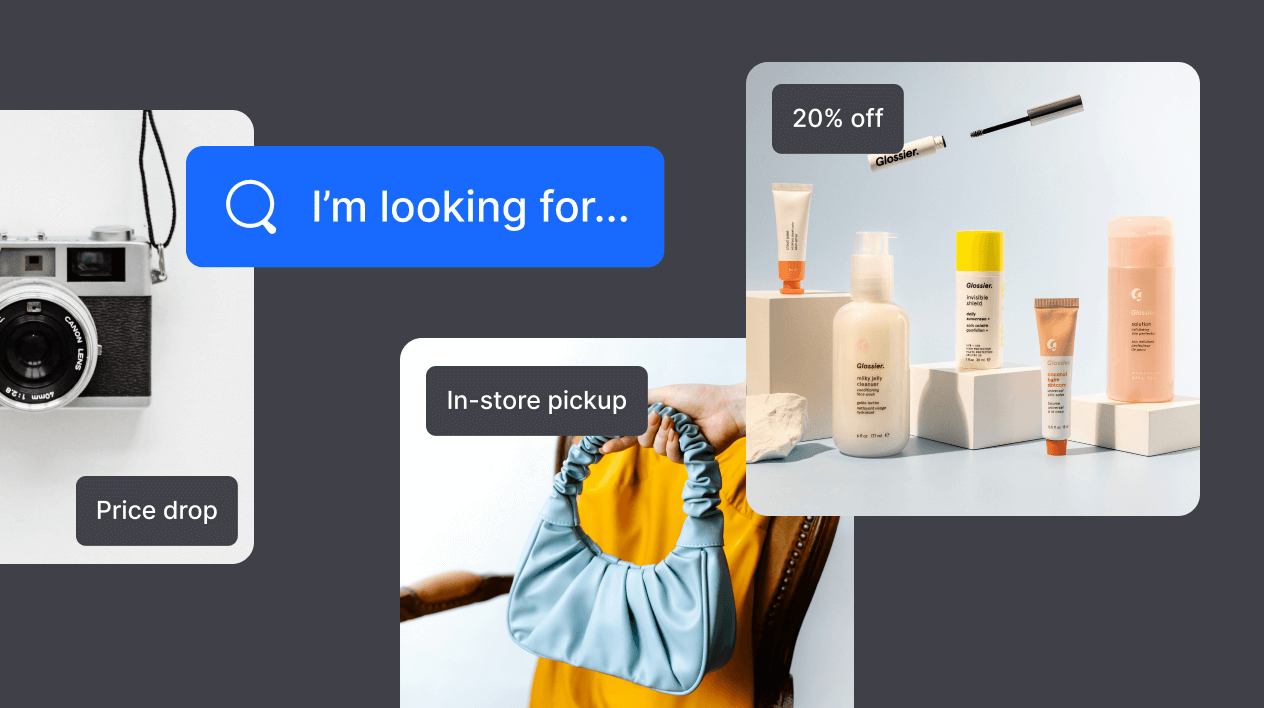
The rise of Agentic Commerce is not happening in a vacuum.
It is happening because customer behavior is changing.
Consumers are becoming increasingly comfortable interacting with AI in other parts of their digital lives, whether that’s through search, content discovery, productivity tools, or personal assistants.
That expectation is now making its way into commerce.
Today’s customer increasingly wants experiences that feel:
- faster
- more relevant
- more personalized
- more intuitive
- less manual
- less overwhelming
And the truth is, most shoppers do not want to work that hard to buy anymore.
They don’t want to compare ten similar products on their own.
They don’t want to jump between tabs.
They don’t want to read five different PDPs to figure out which option is best.
They want help.
The future of commerce is not more options. It’s better guidance.
That is one of the biggest opportunities AI shopping agents are beginning to address.
Why Traditional Commerce Is Starting to Feel Dated?!
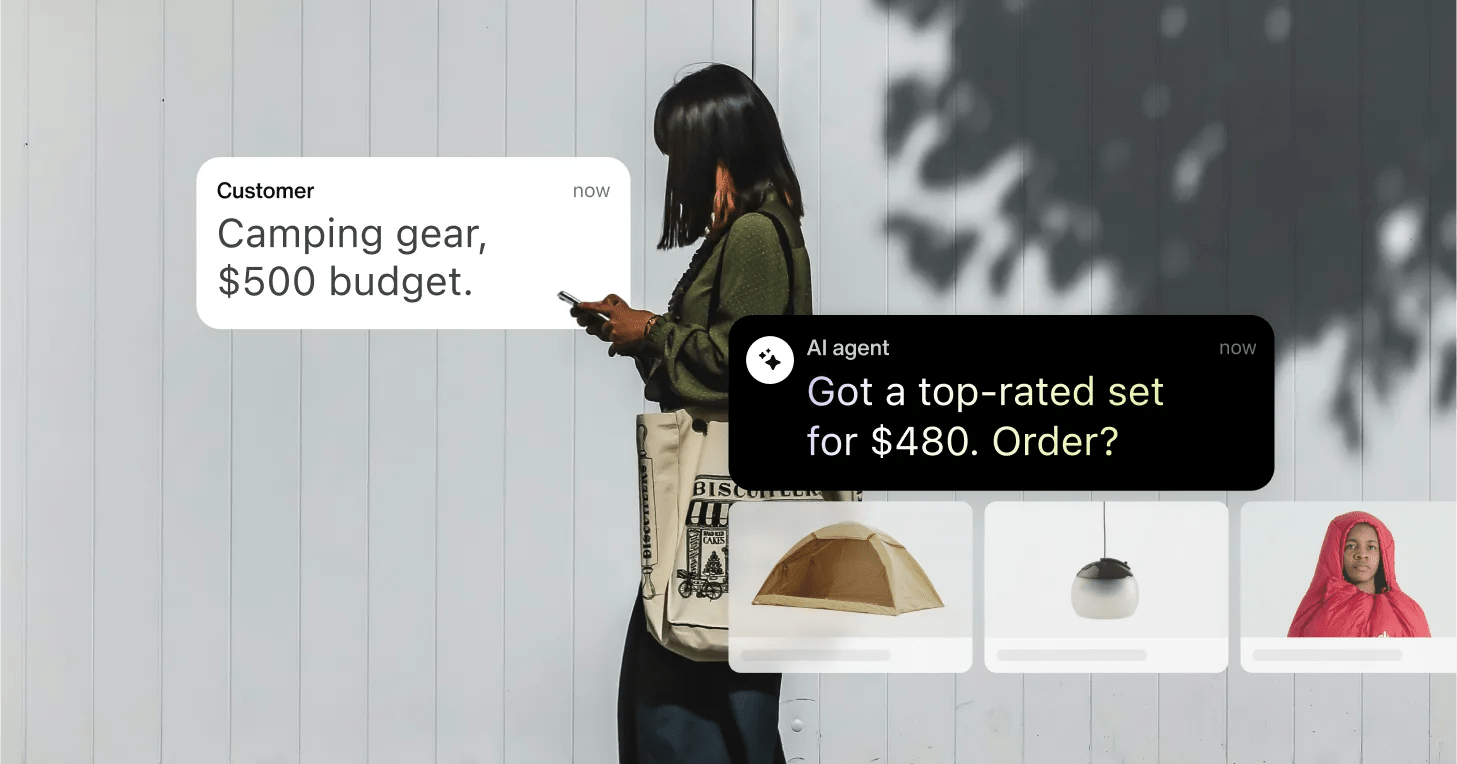
Traditional eCommerce is still largely built around a very old assumption:
That the customer will figure it out alone.
And while that model worked for a long time, it is starting to show its age.
Most digital storefronts still depend heavily on:
- navigation menus
- filters
- keyword search
- static recommendations
- static product pages
- static merchandising
Those tools are still important. But they are no longer enough on their own.
A beautiful storefront is not the same as a guided buying experience.
That distinction matters more than ever.
Because if one brand offers:
- faster recommendations
- more relevant suggestions
- lower decision friction
- better AI-assisted discovery
…and another brand still expects the customer to manually browse, compare, and self-serve everything…
The difference in experience becomes very noticeable.
Some stores will become easier to buy from than others.
That may become one of the most important competitive shifts in digital commerce over the next few years.
AI Shopping Agents Are Already Emerging
This is not theoretical anymore.
AI shopping agents are already starting to show up inside live commerce environments, particularly through apps, integrations, and platform ecosystems that allow brands to layer AI directly into the storefront experience.
Shopify is one of the clearest places where this is already happening
Because Shopify’s app ecosystem is making it possible for merchants to experiment with AI shopping assistants and storefront concierges today.
Examples already in the market include:
- StoreMind (AnyMind AI), which positions itself as an AI store assistant and conversational product shopping layer
- Talkom AI Agentic Commerce, which focuses on conversational product discovery, recommendations, and shopping assistance
- Karley: AI Shopping Assistant, which is positioned more directly as an AI sales assistant designed to support conversion
For Shopify merchants, this means Agentic Commerce is no longer a future-state concept. It is already becoming testable through app-layer implementation.
And that is important.
Because once these experiences begin to improve customer discovery and buying confidence, they are likely to become harder to ignore.
Enterprise commerce platforms are moving in the same direction
This shift is not limited to Shopify.
Larger commerce ecosystems are also moving toward AI-assisted buying experiences.
Enterprise platforms like Salesforce Commerce Cloud have already begun using the language of Agentic Commerce, positioning AI agents as part of the customer experience, product recommendation, and commerce workflow landscape.
Other major ecosystems, including Adobe Commerce, are also increasingly well-positioned to support AI-powered merchandising, product intelligence, and more conversational discovery experiences as the category matures.
The implementation paths may vary, but the strategic direction is becoming clearer:
Commerce platforms are beginning to prepare for AI-assisted buying behavior.
That is a very different world from the one most storefronts were originally built for.
If You’re Not on Shopify or a Major Platform, Can You Still Compete?
Yes. But only if you start preparing now.
Because the real risk is not just:
“We don’t have an AI shopping agent yet.”
The bigger risk is this:
Your store may not be machine-readable, recommendation-ready, or AI-friendly enough to compete in the next buying environment.
That is the real issue.
If AI shopping agents continue to gain traction, brands will not just be competing on product and price. They will also be competing on how easily their products can be:
- understood
- surfaced
- recommended
- compared
- explained
- sold by AI
That changes the rules.
Even if your commerce stack is not one of the “usual suspects,” there are still ways to stay competitive.
1. Third-Party AI Layers Will Continue to Expand
Not every business will need to fully replatform to participate in Agentic Commerce.
As this space matures, more third-party solutions are likely to emerge that can sit on top of or alongside existing storefronts through APIs, overlays, search integrations, or conversational commerce layers.
That means brands outside the major commerce ecosystems may still be able to compete through modular AI implementation.
But that alone will not be enough.
2. Product Data Readiness Becomes a Competitive Advantage
This is one of the most overlooked parts of the conversation.
If AI is going to recommend your products effectively, your store needs to give it something useful to work with.
That means brands should start thinking seriously about:
- product taxonomy
- attribute structure
- compatibility data
- variant clarity
- use-case content
- rich product descriptions
- metadata quality
- FAQ structure
Because in the age of Agentic Commerce, your product catalog is no longer just merchandising infrastructure.
It becomes part of your sales strategy.
That is a very important shift.
3. Content Becomes More Important, Not Less
There is a common assumption that AI somehow makes content less important.
In commerce, the opposite may be true.
If AI is going to help customers shop, it needs to understand:
- What your products do
- who they are for
- How they compare
- Why they matter
- what problem do they solve
- When they should or should not be recommended
That means your:
- PDP copy
- Specs
- FAQs,
- benefit language
- bundles
- use-case descriptions
…all become much more valuable.
Because they don’t just serve the customer anymore.
They also help train and inform the systems that may increasingly influence purchase decisions.
What Brands Should Look for Before Investing in AI Shopping Agents
Not every AI shopping assistant will create meaningful value.
Some will be useful. Some will be novelty. And some will sit somewhere in between.
That is why brands need to evaluate these tools carefully.
Here are a few things worth looking for.
Can it actually help customers buy?
A real AI shopping agent should do more than answer support questions.
It should help customers:
- Choose
- Compare
- Discover
- Narrow
- Decide
If it only functions as an FAQ widget, it may not move the needle much commercially.
Can it understand your products properly?
If your catalog is nuanced, technical, or highly attribute-driven, the AI needs to be able to interpret it accurately.
Otherwise, the experience may feel shallow, generic, or disconnected from what customers actually need.
Can it integrate with the storefront and operating environment?
The more useful systems will typically connect into areas like:
- product catalog
- variants
- inventory
- cart
- policies
- customer support content
This is where the AI begins to create real operational and commercial value.
Can it be measured?
This is critical.
Brands should be able to track whether the tool is actually influencing business outcomes.
That may include things like:
- assisted conversion rate
- AI-influenced add-to-cart
- average order value
- recommendation engagement
- support deflection
- bounce reduction
- revenue influenced by AI-assisted sessions
If it can’t be measured, it will quickly become a novelty instead of a growth lever.
And that is a mistake many brands will make if they approach this category too casually.
The Real Competitive Shift
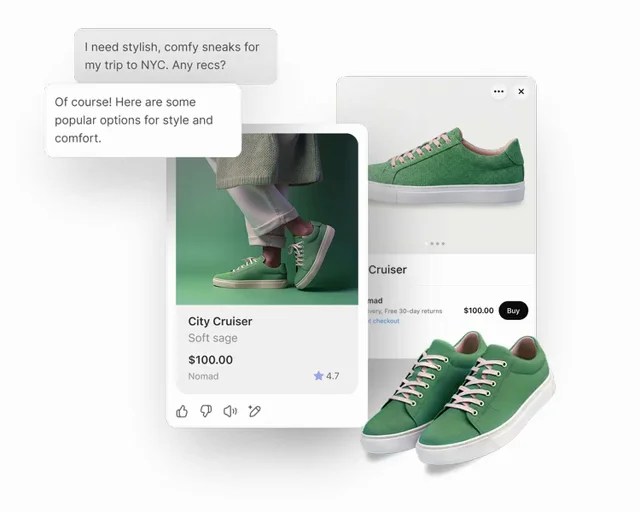
The real shift is not simply that some stores will add AI chat.
The real shift is that some stores will become meaningfully easier to buy from than others.
That matters more than it may seem.
Because if one brand can offer:
- better product guidance
- faster discovery
- lower friction
- stronger recommendation support
- more confidence in the buying journey
…while another brand still relies on static browsing and manual comparison…
The difference in conversion performance may become increasingly hard to ignore.
This is where Agentic Commerce becomes more than a trend.
It becomes a competitive advantage.
Final Thoughts

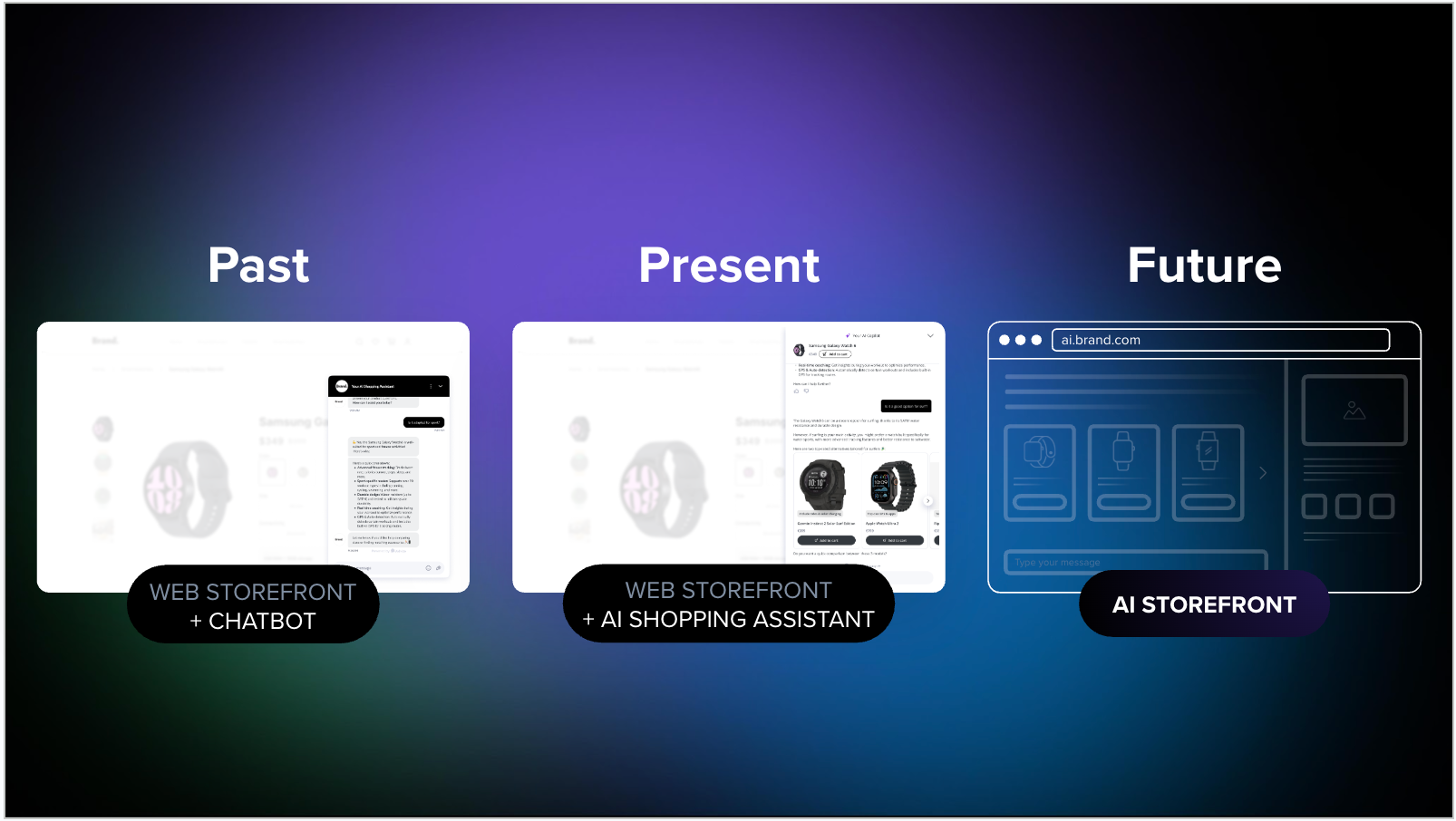
Agentic Commerce is not about replacing the storefront.
It is about adding the missing layer that most digital stores have never truly had:
guided decision-making
That is what many customers have always wanted online, even if the technology wasn’t ready to support it until now.
As AI shopping agents continue to emerge across storefronts, apps, search environments, and commerce platforms, brands will need to think beyond surface-level AI experimentation.
Because the real question is no longer:
“Should we add AI to the site?”
The better question is:
Is our store ready to be sold by AI?
 THINK WITH ALEC
Leave a comment